
-
 Steve Hansen


The golden age of “cheap debt and a prayer” is officially over. Even though the competition between PE firms has never been fiercer, some fundamental flaws are beginning to surface, as seen in recent headlines.
If you’re sitting in a GP seat in 2026, you’ve likely realized that the old-school Private Equity (PE) playbook, leveraging a company to the hilt, trimming the “fat” (which usually meant the innovation budget), and praying for a multiple expansion, is no longer just poor performance. It’s a recipe for a flatline.
The market has shifted. Interest rates aren’t dropping back to zero, Basel III regulations have made traditional banks as cautious as a cat on a glass floor, and a demand for sustainable, high-margin resilience has replaced the “growth at all costs” mantra.
Some, if not most, PE firms are still funding growth in the wrong way. They are treating capital like a blunt instrument when it needs to be a scalpel.
The "Zombie Growth" Epidemic
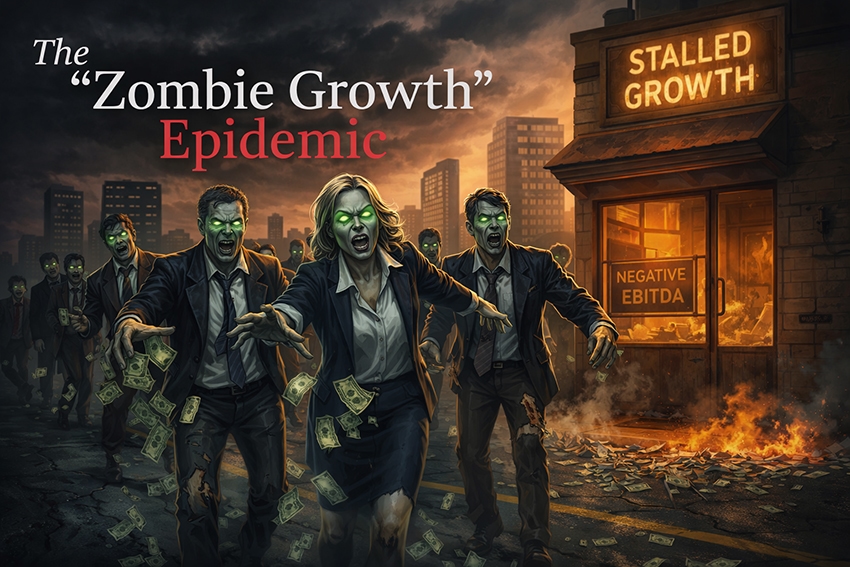
For a decade, PE firms funded growth by chasing Top-Line above all else, which often was a Mirage. They poured capital into aggressive Customer Acquisition Cost (CAC) spending, fueled by low-interest senior debt.
The result? Companies that looked like rockets on a spreadsheet but actually had the structural integrity of a house of cards. When debt service became a line item that rivaled R&D, “growth” stopped being an asset and became a liability.
In 2026, we call this Zombie Growth. It’s growth that requires constant infusions of high-interest capital just to maintain the status quo. If your portfolio company can’t breathe without an emergency credit line, you haven’t funded growth; you’ve funded an addiction.
The Infrastructure Gap: Where the Money Should Go
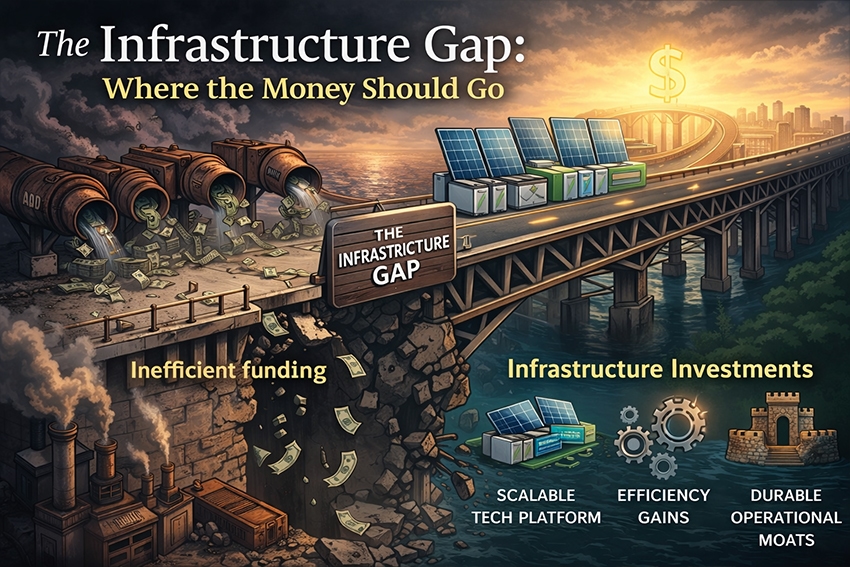
The smartest players in the game have now stopped being obsessed over “more sales” and started being obsessed over Operational Velocity. Instead of dumping $10M into a saturated LinkedIn ad market, elite firms are redirecting that capital into Energy Infrastructure and Automation. Why? In a volatile economy, reducing OpEx (Operating Expenses) is the only “guaranteed” source of ROI.
The 2026 Pivot: * Energy Independence: Funding solar-plus storage arrays for manufacturing portfolio.
- AI-Driven Supply Chains: Investing in predictive logistics rather than just more warehouse space.
- Asset-Light Scaling: Moving away from heavy CapEx ownership and toward strategic equipment leasing.
The Financing Paradox: Why Your Bank is Changing
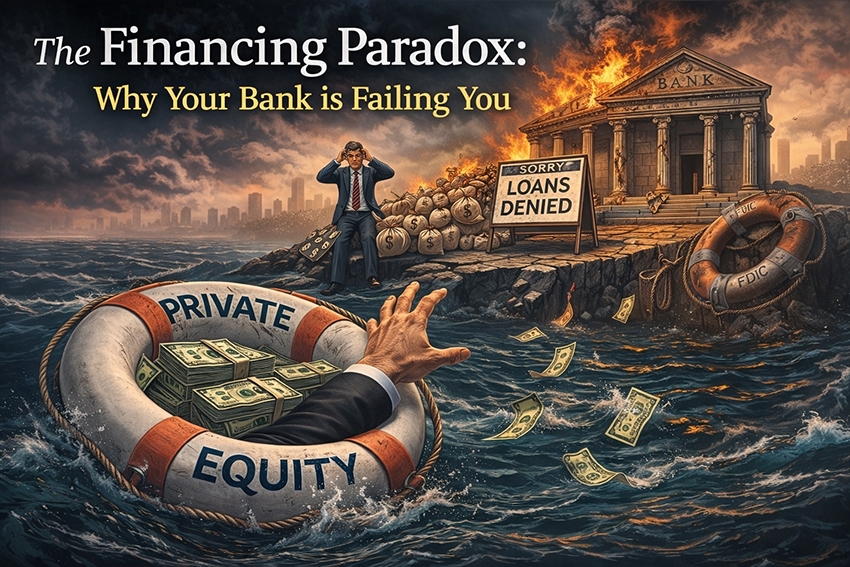
The biggest mistake PE firms make right now is relying on traditional FDIC-insured banks to fuel their growth initiatives through LBO debt, credit facilities and revolvers.
Under Basel III regulations, banks are being forced to hold more capital against “risky” long-term assets. To a bank, your 10-year renewable energy transition project looks like a red flag on a balance sheet. They’ll give you a loan, but the covenants will be so tight they’ll choke your portco’s ability to pivot.
The Fix: Blended Financing. Top-tier firms are now using a mix of:
- Mezzanine Debt for flexibility.
- Specialized Equipment Leasing (like EQLs model) to keep the balance sheet lean.
- Tax-Equity Partnerships to monetize green incentives immediately.
Stop Cutting the "Fat," Start Building the Muscle
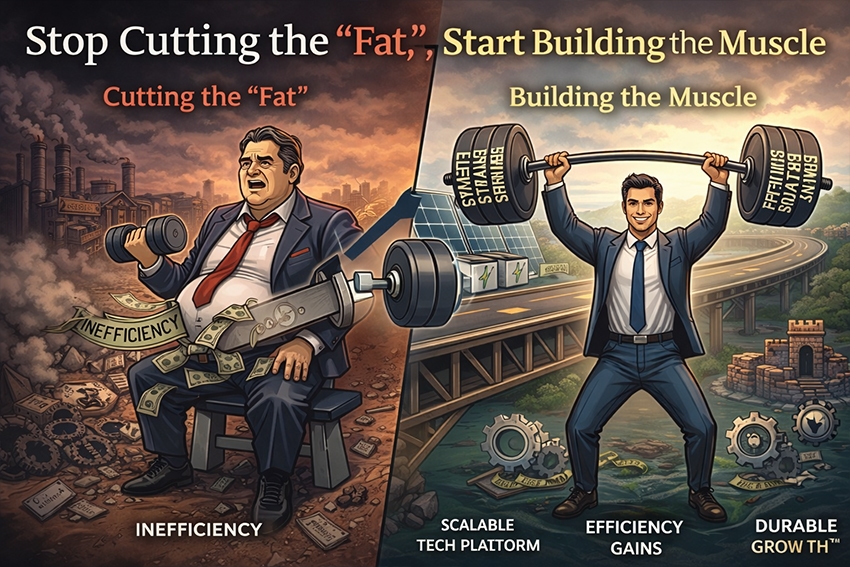
The old PE “strip and flip” mentality focused on EBITDA growth through cost-cutting. But you can’t shrink your way to greatness.
When you cut the “fat” in 2026, you often end up accidentally cutting the Data Infrastructure or Customer Experience (CX) teams. In a world where Millennials and Gen X are the primary spenders, a “glitchy” CX is a death sentence.
The Narrative Shift: Don’t fund “headcount.” Fund “Capability.” If you’re funding a growth round, the story shouldn’t be “We’re hiring 50 sales reps.” It should be “We’re implementing a proprietary AI-layer that makes our current 10 reps 5x more effective.”
The Exit is the Story, Not the Goal
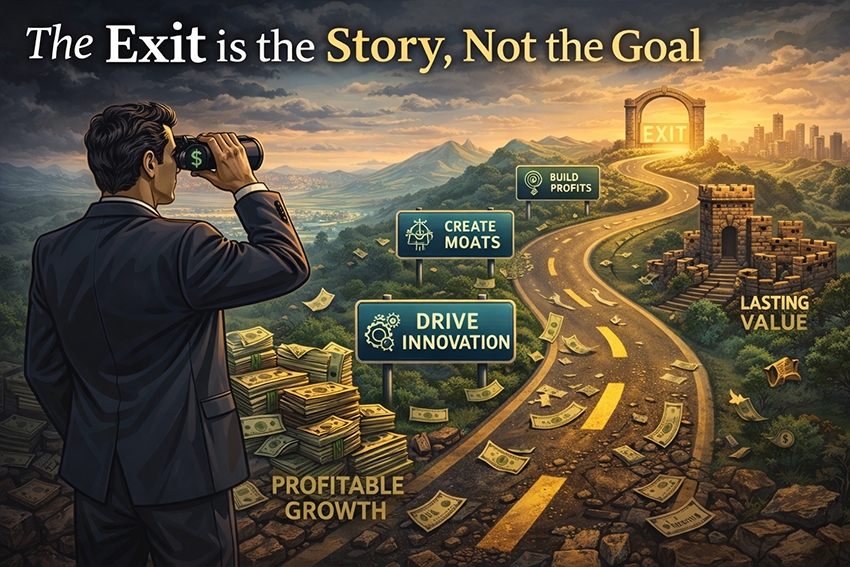
Many firms’ fund growth is with the “Exit Strategy” in mind, even before they roll up their sleeves to see what’s under the hood. They want the EBITDA to look pretty for the next buyer. But the buyers of 2026 are smarter. They are doing Deep-Tech Due Diligence and have more evaluation tools at their fingertips than ever before.
If they see that your growth was bought through unsustainable debt or by ignoring long-term infrastructure needs, they will haircut your multiple faster than you can say “Internal Rate of Return.”
The Winning Playbook: Fund growth that builds Intrinsic Value. * Sustainability as a Moat: A company with its own energy storage and 0% carbon footprint isn’t just “green,” it’s immune to utility price spikes. That’s a massive premium at exit.
- Tech-Debt Zero: Funding the modernization of legacy systems now so the next buyer doesn’t have to.
Summary: The 2026 Checklist for PE Success
The Wrong Way (The “poor” Way) | The Right Way (The “Elite” Way) |
Chasing Top-Line Revenue at any cost. | Chasing Net-Margin Resilience. |
Relying solely on traditional bank debt. | Using Blended Finance & Equipment Leasing. |
Cutting R&D to fluff EBITDA. | Investing in AI & Automation to scale EBITDA. |
Ignoring energy costs as “fixed.” | Treating energy as a controllable strategic asset. |
The Bottom Line: The firms that will dominate in the next decade aren’t the ones with the most capital. They are the ones with the most Creative Capital. Stop funding the “what” and start funding the “how.”
If your portfolio company is still paying retail for its energy and retail for its debt, you aren’t a growth firm. You’re a legacy firm. It’s time to update the playbook.
Ready to stop funding growth the wrong way?
