
Equipment Financing for Hedge Funds
CAPEX Optimization Beyond the Real Estate Stack
Deploy capital into asset-backed leasing structures that combine yield, collateral protection, and predictable cash flow. We act as your outsourced execution partner, enabling hedge funds to diversify portfolios with non-correlated assets while maintaining strict capital discipline.
Hedge funds partner with Equipment Leases to deploy capital into equipment-backed leasing structures that combine yield, collateral protection, and predictable cash flow.
Equipment leasing provides exposure to real, income-producing assets with shorter durations and defined downside protection.
As an outsourced CAPEX execution platform, Equipment Leases sources and structures transactions aligned with private credit, structured lending, and opportunistic investment strategies.
This approach enables hedge funds to diversify portfolios while maintaining a heightened level of capital discipline.
Significant Growth in Hedge Fund Assets over the Past 10 Years
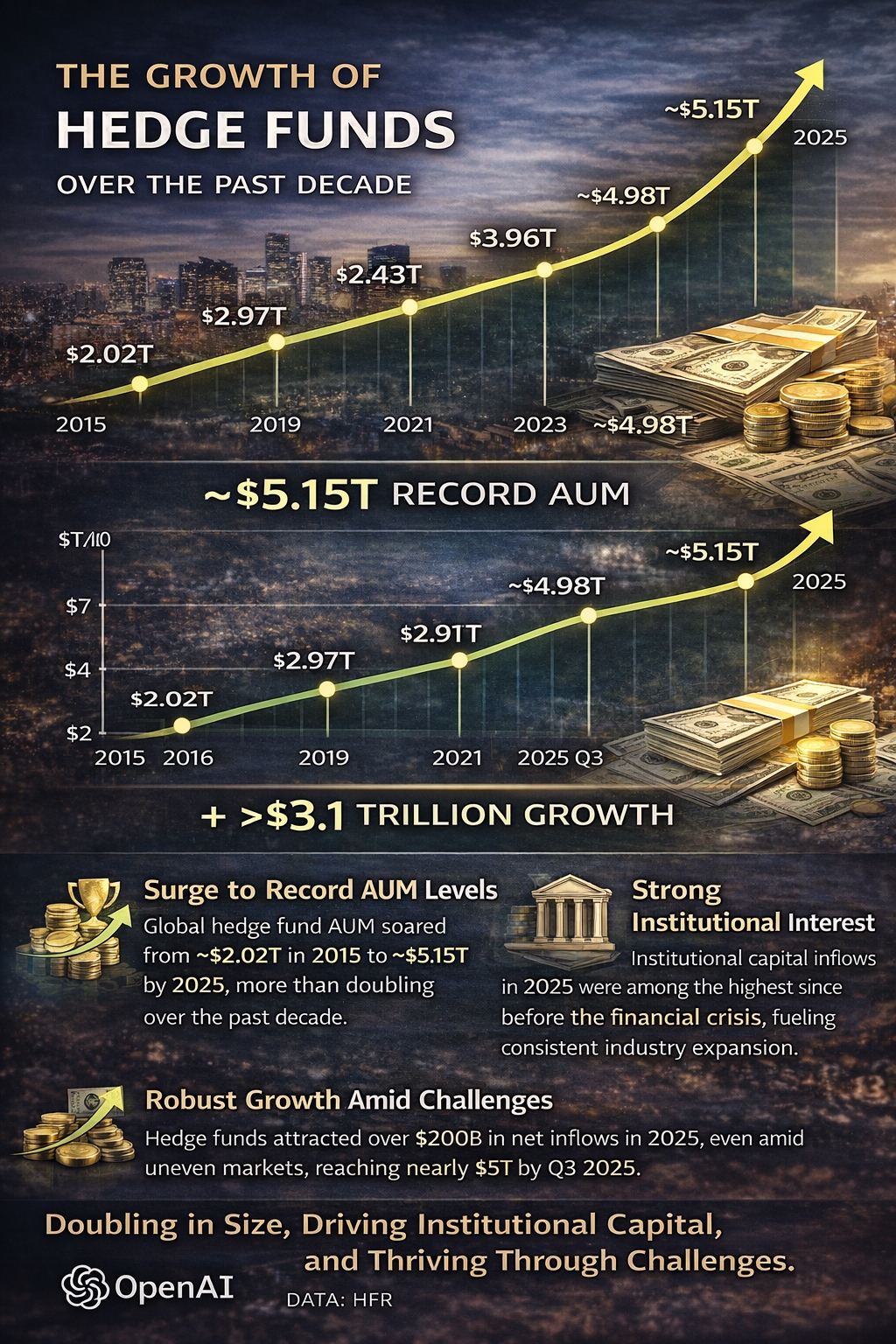
Over the past 10 years, the global hedge fund industry has expanded substantially in assets under management (AUM):
- Hedge fund industry capital has climbed to historic levels. By the end of 2025, total hedge fund assets reached a record $5.15 trillion, representing strong cumulative growth over the past decade.
- As recently as the third quarter of 2025, global hedge funds recorded capital of nearly $4.98 trillion, reflecting consistent net inflows and performance gains.
- In the early-to-mid-2010s, the industry’s total AUM was significantly lower — roughly under $2 trillion — meaning the sector has more than doubled its capital base over the last decade.
- This growth reflects both performance-driven gains and renewed investor interest, as institutional and private capital continue to allocate into alternative strategies for risk diversification and yield enhancement.
Industry Expansion and Structural Growth
- The hedge fund industry has seen growth in both the number of firms and capital inflows, with stronger momentum for larger funds and multi-strategy vehicles.
- Institutional inflows in 2025 were among the largest since before the financial crisis, indicating renewed confidence among allocators such as pension funds, endowments, and family offices.
- While flows are uneven across strategies and geographies, overall capital levels and investor demand have demonstrated resilience and expansion compared to the previous decade.
In Summary: Last 10 Years at a Glance
- Hedge fund AUM has more than doubled since the mid-2010s.
- Industry capital passed $5 trillion in 2025, a record milestone.
- Net inflows and strong institutional interest contributed to steady growth, supported by solid performance across major strategies.
Hedge Fund Equipment Financing Success Stories
Case Study 1: Hedge Fund Deploys Capital Into Asset-Backed Equipment Leasing for Predictable Yield
Hedge Fund Profile
Investor Type: Multi-Strategy Hedge Fund
Investment Focus: Private credit and structured yield
Primary Objective: Predictable cash flow with downside protection
The Challenge
The hedge fund sought opportunities to deploy capital outside public markets while maintaining asset-backed security and shorter-duration exposure. Traditional private credit opportunities were increasingly competitive, compressing yields and extending lock-up periods.
The fund required a strategy that offered predictable income, tangible collateral, and diversification away from market-correlated assets.
The Equipment Leases Solution
The hedge fund partnered with Equipment Leases to deploy $6.4 million into a diversified pool of equipment-backed leasing transactions across manufacturing and logistics borrowers.
Equipment Leases structured transactions with:
- Senior secured equipment collateral
- Predictable monthly amortization
- Short-to-mid-term lease durations
- Cross-industry exposure to reduce concentration risk
Equipment Leases acted as the origination and execution platform, delivering opportunities aligned with the fund’s yield and risk profile.

The Results
- Consistent monthly cash flow from equipment-backed leases
- Lower volatility compared to public credit strategies
- Strong collateral coverage with clearly identifiable assets
- Improved portfolio diversification
Hedge Fund Investor Benefits with EQL: Equipment Leases enabled the fund to access asset-backed yield with defined downside protection and reduced market correlation.
Case Study 2: Hedge Fund Uses Equipment Leasing to Enhance Yield in Opportunistic Credit Strategy
Hedge Fund Investor Profile
Investor Type: Opportunistic Credit Hedge Fund
Investment Focus: Specialty finance and structured lending
Primary Objective: Enhanced yield with asset protection
The Challenge
The hedge fund identified a gap between traditional private credit returns and higher-risk structured products. The fund sought opportunities that offered enhanced yield without sacrificing collateral quality or liquidity flexibility.
Public markets and unsecured private credit did not meet the fund’s risk-adjusted return thresholds.
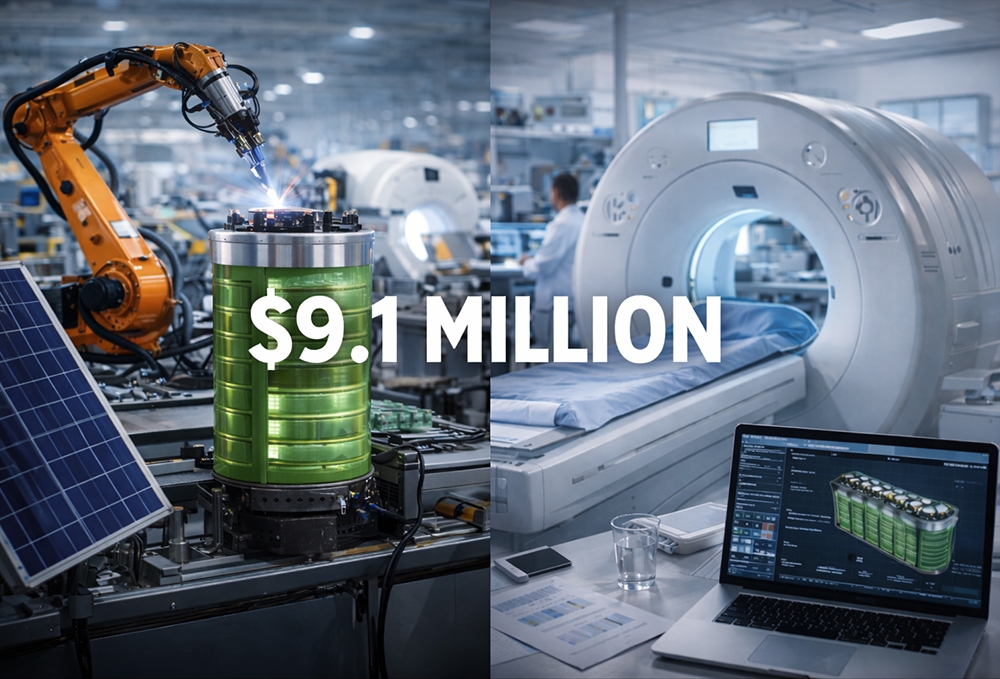
Equipment Leases sourced and structured $9.1 million in equipment leasing transactions tied to revenue-producing assets across industrial automation and healthcare services.
Key structuring elements included:
- Equipment-specific underwriting
- Asset-backed downside protection
- Flexible deployment tranches
- Defined exit paths through amortization or asset liquidation
Equipment Leases served as the hedge fund’s equipment-leasing arm, enabling the fund to deploy capital efficiently without building internal origination infrastructure.
The Results
- Enhanced yield relative to traditional private credit
- Reduced exposure to enterprise-level credit risk
- Asset-level control and recovery options
- Strong performance across varying market conditions
Hedge Fund Finds Solutions with EQL: By partnering with Equipment Leases, the hedge fund gained access to specialty finance opportunities that balanced yield enhancement with tangible collateral security.
Why Hedge Funds Partner with Equipment Leases
Specialized Origination Platform
Unlike direct lending funds that must build origination infrastructure from scratch, Equipment Leases provides turnkey access to deal flow. We maintain established relationships with equipment vendors and dealers nationwide, direct lessee relationships across 20+ industries, and proprietary deal sourcing through our technology platform. We review hundreds of millions of applications annually and deploy capital selectively into transactions that meet institutional-grade credit standards.
Institutional-Grade Underwriting
Every transaction undergoes rigorous credit analysis. Equipment appraisals from certified professionals validate asset values. Lessee financial statement analysis, industry and competitive dynamics review, and equipment secondary market assessment inform every credit decision. Legal documentation review ensures proper structuring. Our credit committee, led by professionals with over 20 years of experience in commercial finance, approves all transactions above defined thresholds. We spend significant time validating and verifying information because our own capital is at stake alongside our investors’.
Active Portfolio Management
Unlike passive private credit investments, Equipment Leases provides ongoing oversight: monthly payment monitoring and collection, quarterly equipment inspections for large assets, proactive workout strategies for troubled credits, insurance and tax escrow management, UCC filing monitoring and renewal, and regular portfolio reporting and analytics. Institutional partners have full visibility into portfolio performance at all times.
Equipment Expertise and Recovery Capabilities
Our team includes equipment specialists with deep relationships in the remarketing market. With decades of average experience in equipment finance, we maintain established buyer relationships across equipment categories, certified equipment appraisers, a national remarketing network, and proven recovery processes that protect investor capital when defaults occur.
Flexible Capital Partnership Structures
We tailor investment structures to hedge fund requirements: single-asset, portfolio, or warehouse structures; active or passive investment options; co-investment opportunities for larger transactions; preferred return or straight participation options; and quarterly distributions or reinvestment structures. Every partnership is configured to align with fund-level cash management and deployment needs
Transparent Reporting and Communication
Institutional partners receive monthly performance reports with payment status, quarterly portfolio analytics and trends, direct access to our portfolio management team, and comprehensive annual reporting. We believe transparency builds the trust that sustains long-term capital partnerships.
Institutional Investor Qualifications
-
Investor Qualifications
We partner with institutional investors who meet Qualified Purchaser or Accredited Investor requirements, have the capability to obtain institutional investment committee approval, and bring experience with alternative credit investments. Our partnerships are designed for sophisticated capital allocators who understand private credit structures and value asset-backed security.
-
Investment Timeline Expectations
Initial diligence and documentation typically require 6 to 8 weeks. Subsequent investments under an established warehouse facility can close in 1 to 2 weeks. We recommend discussing expectations for capital deployment pace during the initial strategy alignment conversation.
-
Reporting and Communication Preferences
We accommodate preferred reporting frequencies, including monthly, quarterly, and annual. We tailor performance metrics, risk monitoring preferences, and LP/investor reporting requirements to each partner's needs.
-
Legal and Compliance Requirements
Investment agreement terms, fund documentation requirements, regulatory compliance for investors deploying on behalf of others, and tax reporting needs, including K-1 and 1099 documentation, are addressed during the documentation phase.
Why Institutional Investors Allocate to Equipment Leasing
As hedge fund assets have grown past $5 trillion, managers face increasing pressure to diversify away from crowded strategies and market-correlated assets. Equipment leasing provides institutional-quality private credit exposure with tangible collateral and attractive risk-adjusted returns. Here is why the investment thesis is compelling.
Asset-Backed Security
Unlike unsecured private credit, equipment leasing provides a direct secured interest in tangible, identifiable assets. Every transaction we structure is backed by equipment that serves a clear business purpose and holds measurable value. Upon default, recovery paths include asset repossession and remarketing, assignment to alternative lessees, and liquidation through specialized equipment channels we have cultivated over decades of operations.
Predictable Cash Flow
Equipment leases generate monthly payments that are amortized over defined terms. This predictable cash flow profile enables precise duration matching for portfolio management, regular capital return that reduces reinvestment risk, consistent yield realization regardless of exit market conditions, and natural deleveraging over the lease term. For hedge funds managing liquidity across multiple strategies, this scheduled amortization provides built-in capital recycling without the need to find secondary market buyers.
Non-Correlated Returns
Equipment leasing performance demonstrates low correlation to public equity markets, traditional fixed income, and commercial real estate. Lease payments are driven by the lessee’s business operations and the equipment’s essential nature, not by broader market sentiment. This lack of correlation provides genuine diversification benefits within alternative credit allocations.
Shorter Duration Exposure
Unlike traditional private credit investments with 5 to 7 year lock-ups, average equipment lease terms range from 24 to 48 months. Monthly amortization provides ongoing liquidity, faster capital recycling for adapting to changing market conditions, and reduced duration risk compared to longer-term commitments. This shorter profile allows hedge funds to test the strategy at a meaningful scale without long-horizon capital lock-up.
Defined Downside Protection
Equipment-level collateral provides multiple layers of risk mitigation. Conservative loan-to-value ratios provide an equity cushion. Equipment appraisals from certified appraisers validate asset values at origination. Secondary-market liquidity is available for most equipment types we finance. Geographic and industry diversification across the portfolio further reduces concentration risk.
Enhanced Yield Without Sacrificing Quality
Equipment leasing occupies an attractive position in the risk-return spectrum. Yields typically exceed those of investment-grade private credit while collateralization remains comparable to that of senior secured lending. Loss rates have historically been lower than those for unsecured private credit, and our flexible structuring enables optimization of each fund’s risk-adjusted return targets.
How Hedge Funds Deploy Capital Through Equipment Leases
We offer multiple investment structures tailored to different hedge fund strategies, deployment timelines, and risk appetites.
-
Single-Asset Transactions
Direct investment in a specific equipment lease. Typical transaction sizes range from $1M to $25M, with duration matched to the specific lease term. This structure is ideal for hedge funds seeking targeted exposure to a specific industry or equipment type, with full transparency into the underlying asset and lessee credit profile.
-
Pooled Portfolio Transactions
Diversified portfolio of equipment leases across multiple borrowers, industries, and equipment types. Typical commitments range from $5M to $50M, with a weighted-average duration of 3 to 4 years. This structure delivers built-in diversification and passive deployment for funds seeking broad exposure to equipment leasing.
-
Warehouse Lines
Revolving commitment to fund originated leases as they are sourced and underwritten. Typical facility sizes range from $10M to $100M+, with 12 to 36-month commitment periods. Warehouse lines offer scalable deployment with ongoing access to our origination pipeline and are well-suited for funds with flexible capital-allocation mandates.
-
Programmatic Partnerships
Ongoing capital partnerships across multiple transactions with enhanced returns for scale and commitment. Typical commitments start at $25M+ on a multi-year basis. Programmatic partners receive priority access to deal flow, preferred economics, and deeper integration with our origination and portfolio management teams.
-
Return Profile Components
Returns are generated through multiple sources: the base lease rate, late fees and default interest, residual value capture, and early termination fees on an opportunistic basis. We structure each partnership to align return expectations with credit quality and equipment type.
-
Credit Enhancement Features
Our transactions incorporate multiple layers of credit protection: personal guarantees, where applicable; cross-collateralization across portfolios; cash reserves and holdbacks; first lien security interests and UCC-1 perfection; and insurance requirements on all financed equipment.
The Capital Deployment Process
Our institutional partnership process is designed for investment professionals conducting rigorous due diligence. We move efficiently because we know your time and capital are both valuable.
Partnership Discussion and Strategy Alignment (Week 1)
Initial conversation covers investment thesis, target returns, and risk parameters. We execute an NDA for confidential transaction details, align on strategy (single-asset vs. portfolio, passive vs. active), and provide a preliminary term sheet outlining structure and economics. This is a two-way evaluation. We want to understand your mandate as clearly as you want to understand our capabilities.
Due Diligence Materials (Weeks 2-3)
Equipment Leases provides comprehensive due diligence materials, including historical performance data covering default rates, recovery rates, and yield profiles. We share current portfolio composition and performance, our origination and underwriting processes, our risk management framework, legal structure, and documentation precedents, management team backgrounds and experience, and references from existing institutional partners.
Transaction-Level Underwriting (Ongoing)
For each investment opportunity, we provide equipment appraisal and valuation methodology, lessee credit analysis, industry and equipment type assessment, geographic and concentration risk review, legal documentation review, and collateral perfection verification. Every transaction undergoes the same rigorous credit analysis as our own capital.
Investment Documentation (Weeks 4-6)
Documentation includes the investment agreement, security agreements, UCC filings, servicing agreements, reporting requirements, covenants, and legal counsel review. We work with your legal team to ensure all fund or LP approval requirements are met before execution.
Funding and Ongoing Management
After execution, we manage capital deployment timing, servicing, and collections oversight, quarterly reporting covering performance metrics, portfolio composition, and cash distributions. We handle default management and recovery procedures and provide a continuous pipeline of ongoing investment opportunities.
Typical Timeline: First investment approximately 6 to 8 weeks from initial discussion. Subsequent investments under a standing facility can close in 1 to 2 weeks.
Risk Assessment and Management Framework
We believe transparent risk disclosure is essential for institutional credibility. Hedge fund partners should understand the risk profile of equipment leasing, along with the mitigation strategies we employ.
Equipment Depreciation Risk
Equipment values decline over time. We mitigate this by using conservative LTV ratios, shorter lease terms relative to useful life, focusing on equipment types with stable residual values, and conducting regular appraisals throughout the lease term.
Lessee Credit Risk
Default by the lessee on payment obligations represents a core risk in any lending activity. We manage this through rigorous credit underwriting, personal guarantee requirements, deposit requirements, and portfolio diversification. No single lessee represents an outsized concentration within our institutional portfolios.
Remarketing and Liquidation Risk
Repossessed equipment may be difficult to redeploy or sell in certain circumstances. We focus on liquid equipment types with established secondary markets, maintain relationships with equipment dealers and brokers nationwide, and ensure geographic diversification across the portfolio.
Concentration Risk
Over-exposure to a single industry or equipment type can amplify losses during sector-specific downturns. We enforce industry limits across managed portfolios and maintain equipment type diversification and geographic spread.
Economic Downturn Risk
Recession impacts lessee payment capacity across the board. We mitigate this by focusing on essential, revenue-generating equipment rather than discretionary assets. We maintain a mix of industries with different economic sensitivities and leverage shorter durations that provide flexibility to adjust strategy. When market volatility or economic pressure hits, we collaborate with lessees to restructure and recover rather than rush to default. This partnership approach has protected investor capital through multiple cycles.
Documentation and Perfection Risk
Improperly perfected collateral interests can jeopardize recovery. We manage this through systematic UCC-1 filings, certificate-of-title documentation, where applicable, equipment verification procedures, and legal counsel review for every transaction.
Key Risk Metrics We Monitor
Our portfolio management team tracks portfolio delinquency rates at 30, 60, and 90 days, net charge-off rates, recovery rates on defaulted leases, residual value realization relative to initial projections, industry and geographic concentration, and weighted-average credit quality. These metrics are reported to institutional partners on a quarterly basis.
Diversified Exposure Across Sectors and Asset Classes
Equipment Leases finances revenue-generating equipment across more than 20 industries nationwide. For institutional investors, this breadth enables true portfolio diversification by equipment type, industry, geography, and borrower credit profile.
-
Manufacturing and Industrial Equipment
Equipment types include CNC machines, injection molding systems, automation equipment, and material handling systems. Typical lease sizes range from $500K to $10M. Credit profiles vary widely, often including family-owned businesses with strong operating histories. This category features stable demand and strong residual values.
-
Healthcare and Medical Equipment
Equipment types include imaging systems (MRI and CT scanners), laboratory equipment, surgical tools, and practice management systems. Typical lease sizes range from $250K to $5M. Credit profiles tend to be strong due to the equipment's essential nature. This category historically demonstrates very low default rates.
-
Transportation and Logistics
Equipment types include commercial trucks, trailers, forklifts, and warehouse automation systems. Typical lease sizes range from $100K to $10M. Performance characteristics include some economic sensitivity, offset by strong secondary markets and high equipment liquidity.
-
Technology and Data Infrastructure
Equipment types include servers, networking equipment, data center infrastructure, and telecommunications systems. Typical lease sizes range from $500K to $15M. Rapid obsolescence risk is offset by higher yields and shorter lease terms.
-
Food and Beverage Production
Equipment types include commercial ovens, packaging systems, refrigeration units, and bottling lines. Typical lease sizes range from $250K to $5M. Equipment is essential to operations and provides strong redeployment options in the secondary market.
-
Construction and Heavy Equipment
Equipment types include excavators, cranes, and specialized construction equipment. Typical lease sizes range from $100K to $10M. Economic sensitivity is offset by very liquid secondary markets.
Frequently Asked Questions from Hedge Fund Partners
What are typical net returns to investors after all fees?
Returns vary based on credit quality, equipment type, and deal structure. We provide transparent fee disclosure covering origination fees, servicing fees, and, where applicable, performance fees, so investors can evaluate net returns with full visibility.
How do you handle defaults and equipment recovery?
We employ a structured workout process that begins with proactive communication and forbearance where appropriate. When recovery is necessary, we execute repossession, engage our national remarketing network, and pursue liquidation through specialized equipment channels. Our team manages the full cycle from default identification through asset recovery and redeployment.
What is your loss given default rate?
Our asset-backed structure and recovery capabilities result in loss-given-default rates that are significantly lower than those for unsecured private credit. Detailed historical LGD data is available to qualified institutional investors during the due diligence process.
How liquid are these investments?
Primary liquidity comes through scheduled amortization, which provides regular capital return over the lease term. The secondary market for equipment lease portfolios is limited but developing. Early exit options may be available with an appropriate discount or fees. Typical holding periods align with the portfolio’s weighted-average lease term.
What happens in an economic downturn?
We focus on financing essential, revenue-generating equipment rather than discretionary assets, which provides resilience during downturns. Industry diversification reduces sector-specific exposure. Shorter lease durations allow faster capital recycling and strategic adjustment. When economic pressure hits, we collaborate with lessees to restructure and recover rather than rushing to default. This partnership-first approach has protected investor capital through multiple economic cycles.
How do you source deal flow?
Our deal flow comes through multiple channels. Equipment Leases operates one of the industry’s leading inbound platforms for equipment financing, generating qualified leads nationwide. We maintain established relationships with equipment vendors and dealers, receive referrals from banks and brokers, and leverage direct lessee relationships across 20+ industries. This diversified origination model provides consistent, high-quality transaction flow.
What is your competitive advantage vs. banks and other equipment finance companies?
Three things set us apart: speed, structure, and depth of relationships. Our credit committee is lean with only three to four senior members, enabling same-day decisions when needed. Our structuring capabilities include 100% project financing, progress funding, and flexible terms that banks cannot match. And our direct lending model, combined with syndication partnerships, enables us to deploy our own capital and scale with institutional partners on transactions up to $100 million and beyond.
Can we co-invest in specific transactions?
Co-investment opportunities are available for larger transactions. We welcome institutional partners who want to participate directly alongside our balance sheet in specific deals that align with their mandate. Contact us directly to get more information.
How do tax treatments work for equipment lease investments?
Tax treatment depends on the specific lease structure, whether characterized as an operating lease or a loan, and the investor’s tax status. Depreciation benefits may be available in certain structures. Interest income is treated in accordance with standard tax rules. We recommend consulting with your tax advisor for guidance specific to your fund’s situation.
What are your fees and how are they structured?
We provide complete fee transparency. Our fee structure includes origination fees, annual servicing fees, and, where applicable, performance fees. Total fees are designed to be competitive with direct lending and other private credit strategies. Detailed fee schedules are provided during the partnership discussion phase.